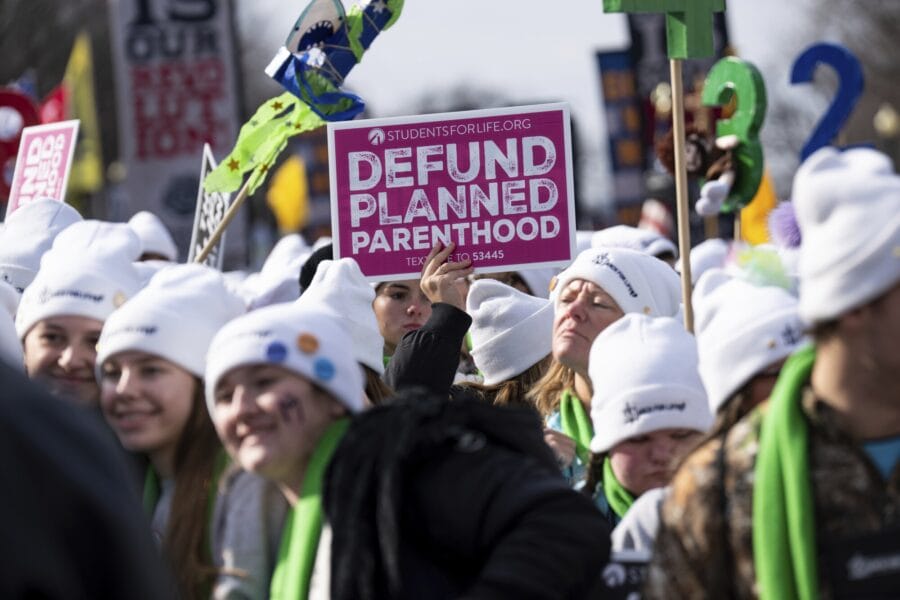
Americans United for Life (AUL) is pleased to share our 2025 Third Quarter Life Litigation Report. The report tracks major bioethics cases in federal and state courts across the country. These cases range from early life issues, such as abortion and in vitro fertilization, to end-of-life questions, such as assisted suicide. The goal of the report is to provide an overview of current trends in bioethics litigation and AUL’s legal and policy insights into courtroom battles over the human right to life. Here are some highlights of the report.
Supreme Court Showdown over the First Amendment and Jurisdictional Loopholes
The Supreme Court is hearing oral arguments in First Choice Women’s Resource Centers, Inc. v. Platkin on December 2nd. The case involves New Jersey’s expansive investigatory subpoena against a pregnancy center, which demanded donors’ identities, ranging from major financial contributors to givers at church baby-bottle campaigns. The Court, however, is focusing on a narrower procedural question involving ripeness: whether it is premature for a federal court to hear the case at this time. Groups across the political spectrum have filed friend-of-the-court briefs in support of the pregnancy center, from religious liberty advocates and Second Amendment proponents to reporters supporting freedom of the press and the American Civil Liberties Union, which highlighted investigatory threats to First Amendment rights.
The Unknown Status of Parental Rights Post-Dobbs
One unresolved question post-Dobbs is the extent to which the Fourteenth Amendment’s Due Process Clause protects parents’ rights to participate in the abortion decision of their unemancipated, minor pregnant daughter.
Litigation has heated up over this question in a case currently before a Missouri Circuit Court, Missouri v. Planned Parenthood Great Plains. Missouri sued Planned Parenthood for allegedly violating the state parental consent law by assisting minors to obtain out-of-state abortions. Planned Parenthood counterclaimed, contending the new state constitutional right to abortion preempts the parental consent law. Then the State filed a motion to dismiss the counterclaim, asserting that the Fourteenth Amendment’s guarantee of parental rights preempts Planned Parenthood’s interpretation of the state constitutional right to abortion.
In Planned Parenthood Mar Monte, Inc. v. Ford, a federal district court granted a motion for relief from judgment to lift a permanent injunction against the state’s parental notification law. After dismissing their appeal in federal court, Planned Parenthood then filed suit in state court to challenge the parental notification law in Planned Parenthood Mar Monte, Inc. v. Nevada ex rel. office of the Nevada Attorney General.
Chemical Abortion Case Updates
In October in Purcell v. Becerra, a district court in Hawaii determined the Food and Drug Administration (FDA) did not properly explain its decision to retain heightened patient safeguards within the 2023 Risk Evaluation and Mitigation Strategies (REMS) on chemical abortion drugs. The court’s decision does not vacate the REMS, but it does require the FDA to reconsider the 2023 REMS and justify its action.
In GenBioPro, Inc. v. Raynes in July, the Fourth Circuit affirmed the dismissal of a complaint that alleged the Food and Drug Administration’s regulation of chemical abortion drugs preempts West Virginia’s pro-life law banning abortion. Within the opinion, the court discussed the breadth of States’ police powers to regulate medicine.
End-of-Life Litigation to Watch
The Third Circuit heard oral arguments in Govatos v. Murphy in September over the dismissal of a lawsuit challenging New Jersey’s residency requirements for assisted suicide.
A lawsuit is pending in the District of Colorado over a similar challenge to Colorado’s residency requirements in McComas v. Polis.
Please reach out if you have any questions regarding the report or to notify us of bioethics litigation to add to our case list.